
Check these points before you buy
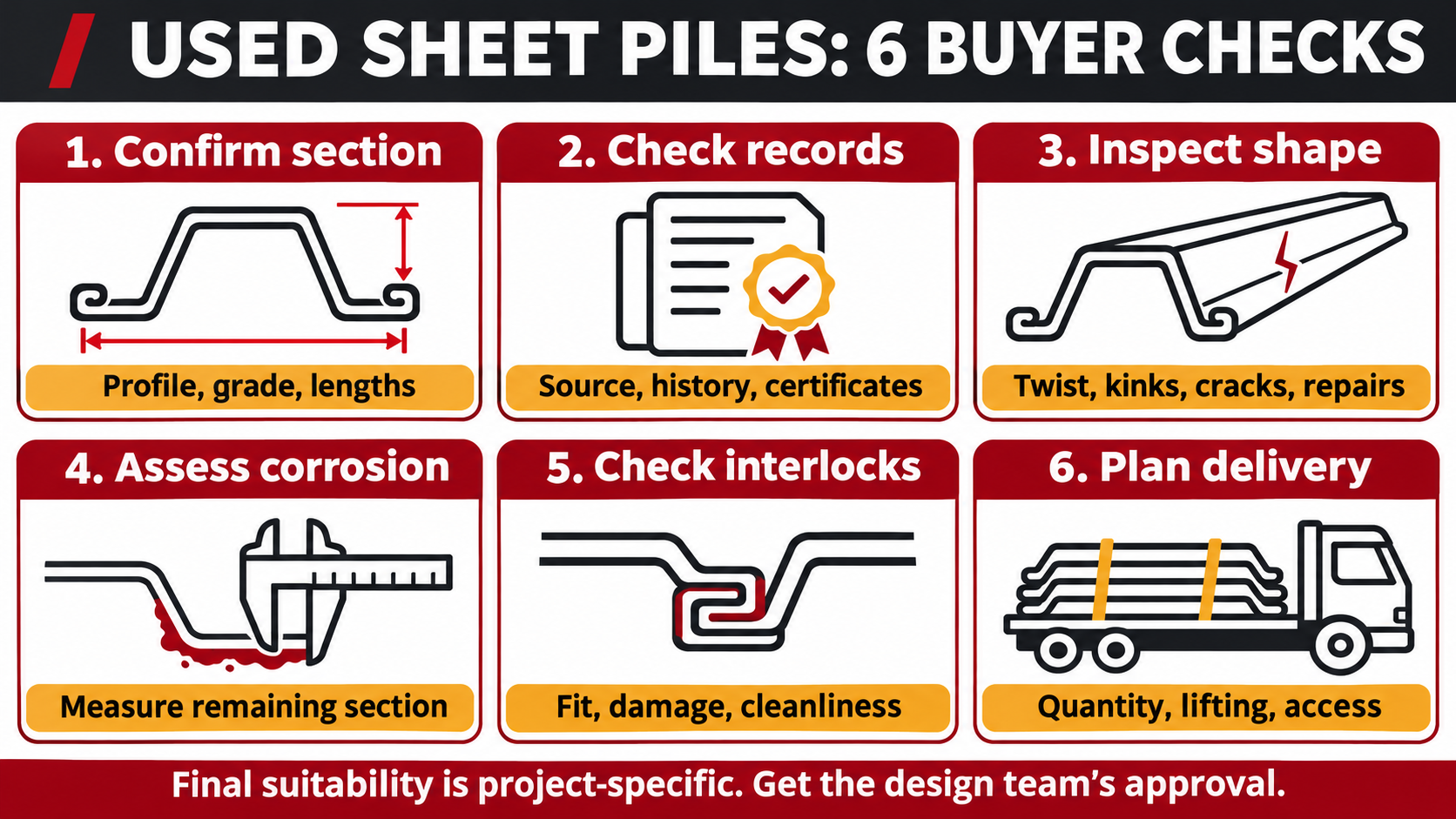
- Match the profile, grade, length and quantity to the project design.
- Ask for the batch history, inspection notes and available material records.
- Inspect for distortion, damaged interlocks, repairs and corrosion.
- Compare the full preparation and delivery cost, not just the pile price.
- Ask the project engineer to approve the actual stock for its intended use.
Used sheet piles can suit a project when the section, condition and available records match the design. Before buying, confirm the profile and lengths, check each batch for distortion and interlock damage, and have the project engineer assess corrosion and the remaining section. Then compare delivery and preparation costs with new piles. Age alone does not tell you whether a pile will work; the design and evidence should guide the choice.
| What to compare | New piles | Used piles |
|---|---|---|
| Material history | Start with the manufacturer and the supplied product records. | Ask about previous use, inspection, repairs and the records available for this batch. |
| Specification | Order to the required profile, grade and length. | Confirm that the actual stock matches the design; check every profile and length in mixed batches. |
| Condition | Check the delivered material and documents. | Inspect distortion, corrosion, repairs, pile ends and interlocks; ask the engineer to assess the remaining section. |
| Project fit | Useful when the design calls for a specific section or known material history. | Worth considering when the batch passes project-specific checks and needs little preparation. |
| Total cost | Include supply, transport and any project-specific preparation. | Include inspection, sorting, cleaning, cutting, repair, transport and spare piles. |

Start with the project design
Ask the designer what the wall needs to do before you compare stock. Confirm the profile, grade, length, section properties, quantity and any requirements for coatings or sealed interlocks.
A pile that looks close to the drawing may still differ in ways that matter. A different profile or grade can change the design assumptions, and a shorter pile may not provide the required length. Ask the engineer to review substitutions before you reserve or buy a batch.
Used piles are not limited to temporary works. A manufacturer’s reuse guide describes both temporary projects and some permanent applications, while making clear that the project needs its own assessment. Ask the design team to approve the actual material and condition for the intended use. Read the sheet-pile reuse guide. You can also compare section shapes in SPS’s guide to sheet-pile types.
Check the stock records
Ask the supplier what the batch contains and what information comes with it. Try to confirm:
- The profile, steel grade and manufacturer, if known.
- The number of piles and the available length of each one.
- Whether the stock comes from one batch or several.
- How the supplier inspected the piles and classified their condition.
- Any known previous use, repairs, cutting or other modifications.
- Which certificates, test results or material records the supplier can provide.
- Whether the listed stock remains available in the stated quantity.
A clear stock schedule helps the engineer compare the supplied piles with the design. If the batch mixes profiles, grades or lengths, ask the supplier to list each group separately. Don’t assume that piles that look alike have matching properties.
SPS’s sheet-pile supply team can discuss reusable piles, section selection and supply planning.
Inspect each pile
Photos can help you shortlist a batch, but they rarely show every area that matters. If possible, inspect the stock in person or ask for clear close-ups of representative piles and any visible damage. Agree the inspection approach with the project engineer.
- Check for bends and distortion. Look along the web and flanges for twists, kinks and dents that could affect pitching, alignment or fit.
- Look at the head and toe. Driving and extraction can damage pile ends. Ask whether anyone needs to cut off a damaged length and whether the remaining pile still suits the design.
- Identify cracks and repairs. Show the engineer any cracks, welded repairs, added plates or other changes before relying on the section.
- Assess corrosion. Look for general corrosion and local pitting. Surface appearance alone cannot tell you how much steel remains. Where section loss affects the design, have a competent person take appropriate measurements and ask the engineer to assess them.
- Check coatings. If the design relies on a coating or corrosion protection, confirm its condition and suitability for the new application.
Don’t apply one visual rule or thickness limit to every project. The engineer should compare the measured section with the design, exposure and required service life. The European Commission’s report on reclaimed steel discusses assessment, documentation and responsibilities for structural steel more broadly; use it as context, not as sheet-pile design guidance. Read the JRC report on reclaimed steel components.
Make sure the interlocks fit
Each pile’s interlock, also called a clutch, must engage with the adjoining pile. Check for flattened, bent, torn or clogged interlocks. Ask the supplier to show how representative piles connect, especially if the batch includes different profiles or repairs.

The interlocks also matter when the design sets a seepage limit. If the wall needs sealed joints, confirm the specified interlock and sealing system before you buy. SPS explains the options in its guide to sheet-pile watertightness. ArcelorMittal’s reuse recommendations also discuss alignment, storage and local repairs as factors that affect reuse. Read the manufacturer’s reuse recommendations.
Compare the whole project cost
A lower pile price does not always mean a lower project cost. Compare the same scope for each option, including:
- Material price and delivery.
- Inspection, sorting and measurement.
- Cleaning, straightening, cutting or repairs.
- Loading, unloading and handling on site.
- Spare piles to cover stock that proves unsuitable or too short.
- Installation requirements, programme and any planned extraction.
New piles may make more sense when the project needs a specific section, length or material record that the available stock cannot provide. Used piles may offer good value when the batch matches the design and needs little preparation. Ask for quotes based on the same project assumptions, then compare the totals. SPS’s sheet-piling cost guide explains other project costs to include.
Ask the supplier these questions
- What profile, grade and lengths does this batch contain?
- How many piles can you supply, and do they come from one batch?
- What previous-use or repair history can you share?
- Can I inspect representative piles and interlocks before I commit?
- Who will assess any corrosion, damage or proposed repairs?
- Has the project engineer approved this material for its intended use?
- What preparation, transport and handling will the stock need?
Get clear answers before you choose
Can used sheet piles work in a permanent wall?
They can in some projects, if the design team accepts the actual section, material records and condition. Ask the engineer to check the pile against the design and service-life requirements rather than assuming that new or used stock will always suit.
Does surface rust mean a pile is unusable?
Not by itself. The engineer needs enough information to assess the remaining section and any local pitting against the design. Ask for suitable measurements where corrosion could affect capacity or durability.
Do used piles always cost less?
No. Compare the delivered and prepared cost, including inspection, sorting, repairs, cutting, transport and spare piles. A low material price can disappear if the batch needs significant work.
Talk to SPS about your supply options
If you’re comparing new and reusable stock, send SPS the required section, grade, lengths, quantity, project location and programme. The SPS supply team can discuss the material and delivery information needed for an enquiry. Ask your designer to approve the actual batch before you commit.