
Key takeaways
- Steel pile sections are impermeable, but water may still pass through interlocks, beneath pile toes or around wall ends.
- Sealants and welding can reduce flow through interlocks; they do not seal every route around a wall.
- A temporary cofferdam may manage planned seepage with pumping; a permanent flood defence needs a whole-system seepage and stability assessment.
- Agree the seepage target, ground conditions, installation method and joint details with the project engineers before piling starts.
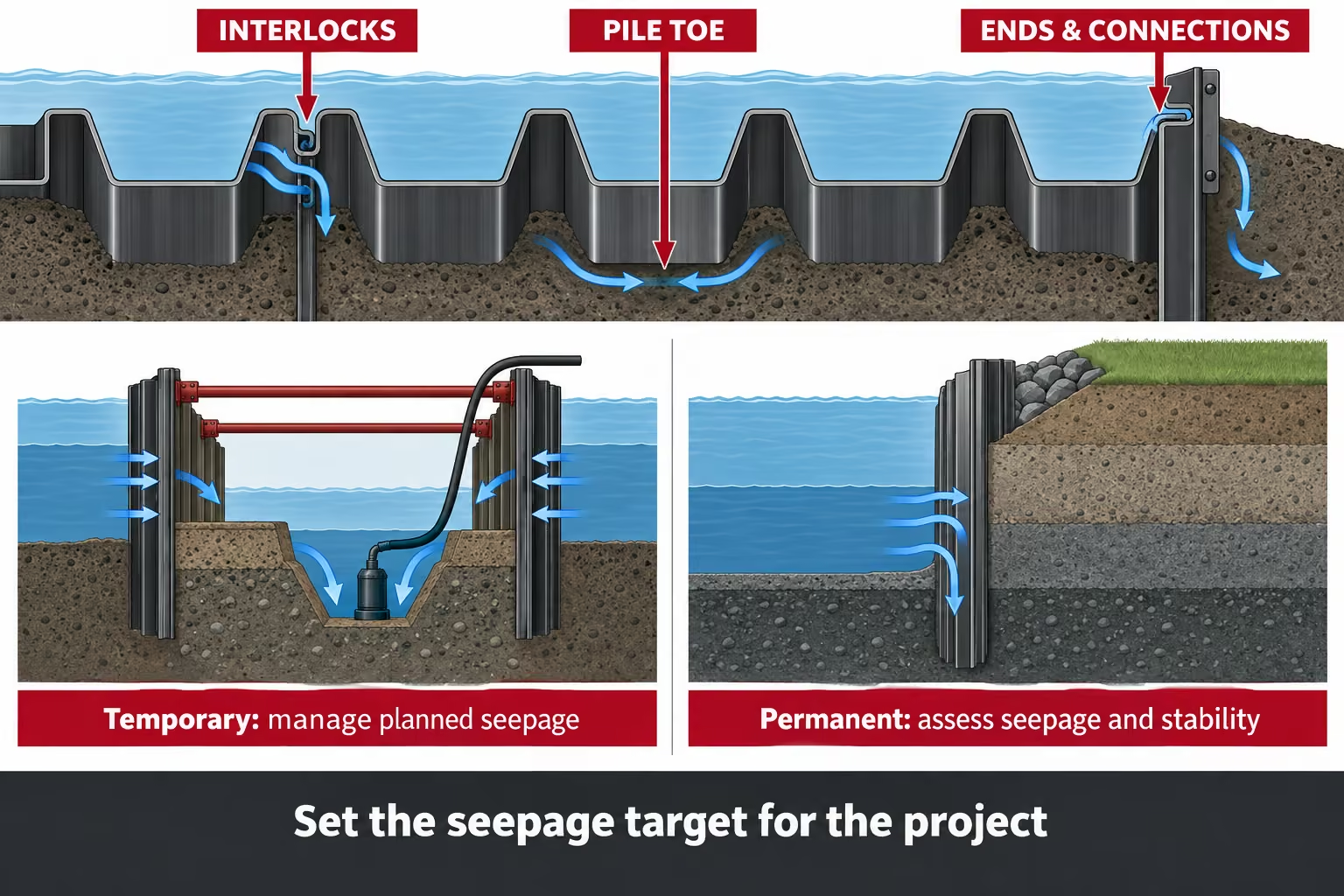
Steel itself does not let water pass through it, but an installed sheet-pile wall is not automatically watertight. Water can pass through the interlocking joints, travel beneath the pile toes, or find a route around wall ends and connections. The right response depends on the required seepage performance: a temporary cofferdam may be designed around controlled seepage and pumping, while a permanent flood defence must be assessed as a complete system under its design conditions.
Where can water get through a sheet-pile wall?
The steel sheets form the wall. The joints between adjacent sheets, usually called interlocks or clutches, are the most obvious route through the wall itself. Even when piles are correctly connected, small variations in alignment, installation and ground conditions can affect how much water passes through those joints.
Water can also pass beneath the pile toes through permeable ground, or go around the ends of a wall. Corners, changes in pile section, tie-ins to existing structures, penetrations and the wall-to-base connection can all need separate detailing. Sealing every interlock will not close a seepage path beneath the wall.
That distinction matters when setting the specification. The project team should decide whether it needs to stop visible leakage, limit inflow to a manageable rate, reduce groundwater movement, or provide a defined cut-off as part of a flood defence. “Watertight” should describe the required performance of the designed system, rather than be assumed from the fact that the piles interlock.
When is sealing the interlocks necessary?
Some sheet-pile applications can accept a degree of seepage. A temporary retaining wall, for example, may not need sealed interlocks if the flow is low, can be managed safely and will not carry soil, undermine the excavation or affect nearby assets.
Other projects need tighter control. A cofferdam may need to keep an excavation workable; a basement may have strict limits on water ingress; and a flood defence may need to reduce seepage paths that could cause nuisance, erosion or instability. The designer should set the performance requirement after considering water levels, ground permeability, soil layers, nearby structures, construction sequence and consequences of leakage.
For flood schemes, the Environment Agency’s floodwall guidance explains that seepage can occur through or beneath a defence, and that it must be considered in stability design. A cut-off may be needed where seepage would cause flooding, nuisance or erosion of foundation material. Read the Environment Agency guidance on floodwalls and seepage.
Methods for reducing leakage through interlocks
Bituminous sealants
Bituminous compounds can be applied inside the pile interlocks before installation. Once the piles are driven, the material helps block the small flow path through the joint. Application, temperature where relevant, surface condition and compatibility with the installation method all affect how the product performs, so the manufacturer’s instructions and the piling sequence need to be agreed before work starts.
Bitumen is not a universal guarantee of a dry excavation. Product capabilities vary, and the sealant may not address leakage at wall ends, the toe or other connections. The project specification should name an appropriate system and define the intended performance.
Water-swelling sealants
Some systems expand when they contact water and are fitted in or applied to the interlock before driving. Their suitability depends on the product, expected water conditions, joint geometry and how the piles will be installed. The supplier and piling designer should confirm that the selected sealant is appropriate for the pile section and installation method.
Welding the interlocks
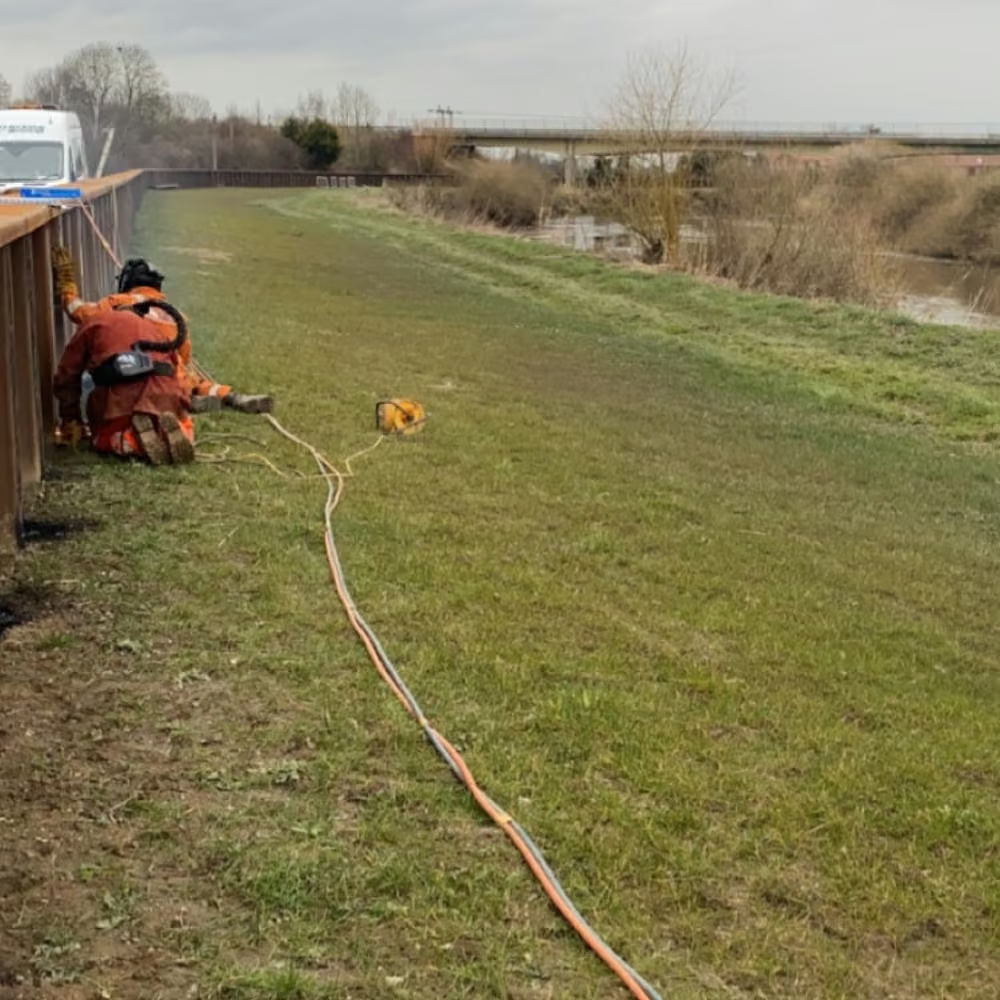
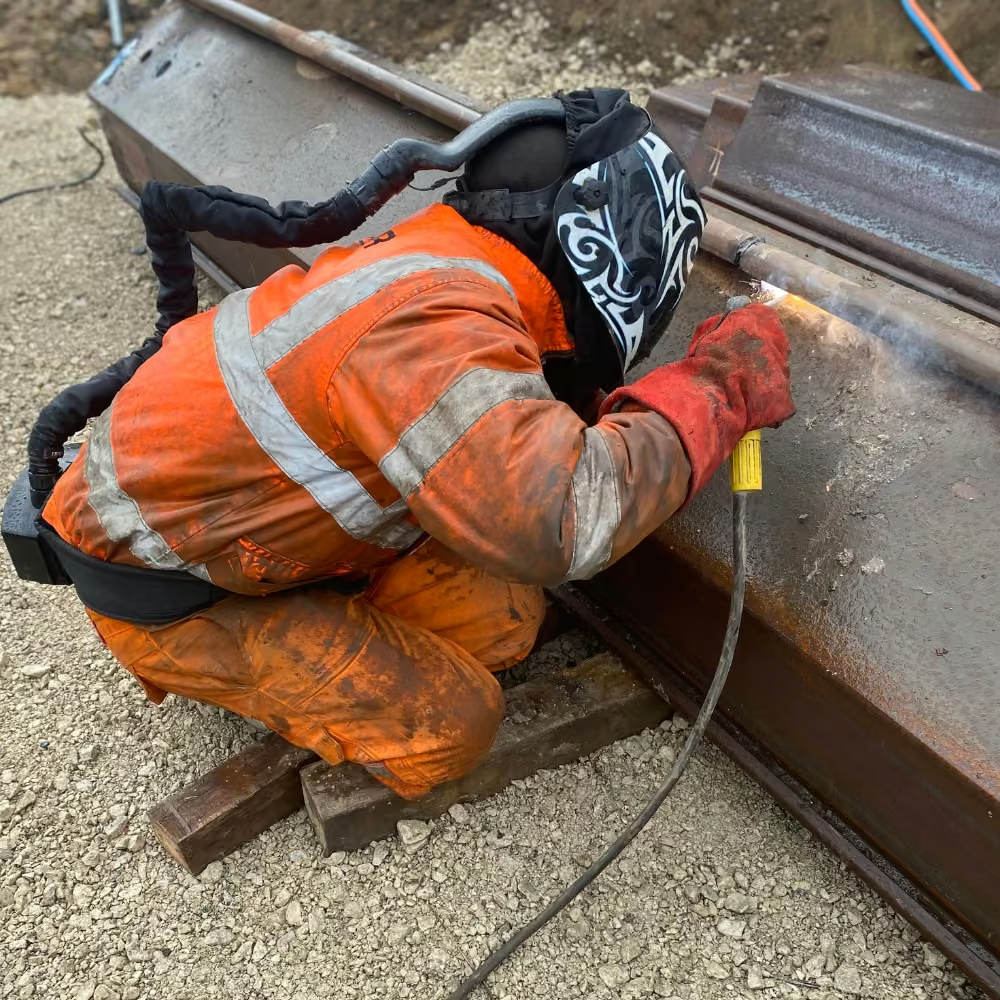
Where a higher level of water exclusion is needed, accessible interlocks can sometimes be seal-welded after installation. Welding can provide a continuous steel seal along the treated joint, but it needs access to the relevant pile faces, a suitable weld detail, preparation and inspection. The structural designer should specify where sealing welds are required and how the completed work will be checked.
Welding is often most practical on exposed sections after excavation. Interlocks below formation level may not be accessible once the piles are installed, so relying on a later weld for those lengths can be impractical. If the plan needs a sealant installed before driving as well as welding afterwards, coordinate the products and sequence so one operation does not compromise the other.
ArcelorMittal’s technical overview describes bituminous, swelling and other interlock-sealing systems, alongside welding, and notes that the required level of seepage resistance determines whether sealing is needed. See its sheet-pile watertightness guidance.
Temporary cofferdam or permanent flood defence?
The purpose changes the question the engineer needs to answer.
| Project use | Performance question | Possible approach |
|---|---|---|
| Temporary cofferdam | Can the work area remain safe and usable with the expected inflow? | Specify interlock sealing where needed and plan any sumps, pumps, discharge and monitoring as part of the temporary works. |
| Permanent flood defence | Will the whole defence remain stable and meet its protection requirements during the design loading? | Assess the interlocks, pile toe, wall ends, transitions and foundation seepage; add cut-offs, sealing or drainage measures where the design requires them. |
A cofferdam does not always need zero leakage. Planned pumping may be appropriate if the temporary-works designer confirms that inflow can be handled without unacceptable drawdown, loss of ground, instability or effects on adjacent property. The pumping and water-discharge arrangements also need to suit the site and applicable approvals.
A permanent flood defence is judged over its service life and under water loading. Some seepage may still occur through or beneath the defence; the design needs to account for its location, rate and effect on stability and the protected area. A sealed interlock is one part of that design, not a substitute for checking the full seepage route.
What should the project team check before installation?
Agree the seepage target with the geotechnical and structural designers before ordering piles or sealants. Then check:
- Ground investigation, groundwater levels and any permeable layers that could provide a route under the pile toes.
- The pile layout, interlock type, corners, closures, wall ends and connections to existing structures.
- Whether sealing is required along the full pile length or only in defined sections.
- The sealant manufacturer’s requirements, compatibility with the piling method and the installation sequence.
- Which joints will remain accessible for post-installation welding and how the welds will be inspected.
- How leakage will be observed and managed during construction, including pump capacity, discharge route and escalation arrangements where pumping is part of the plan.
- How seepage paths and the wall-to-base junction will be handled; interlock treatment alone may not resolve these details.
For a closer look at sheet-pile sections, clutches and sealant supply, see SPS sheet-pile supply. For a permanent or temporary flood-protection scheme, see SPS flood-defence piling.
So, are sheet piles watertight?
The steel sections are impermeable, but the completed wall may still leak at interlocks, beneath the toes, around ends or at connections. Sealants and welding can reduce water passage through the joints, but the right method depends on the ground, water conditions, pile design, installation method and the consequence of seepage.
Set the required performance first. Then have the project engineers and piling contractor agree how the wall, its interfaces and any planned pumping will meet it. To discuss a site-specific requirement, contact the SPS team.