
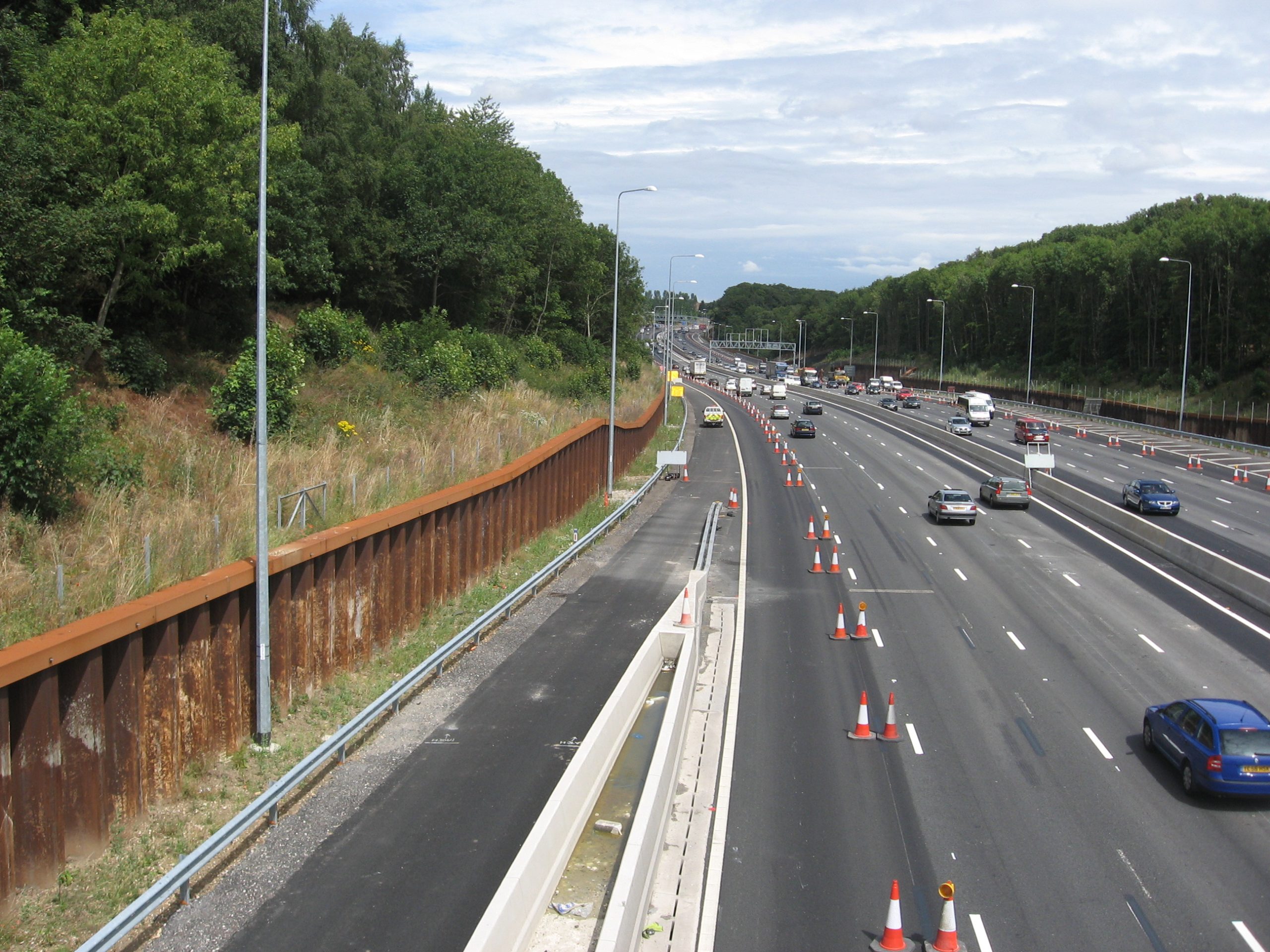
Choosing a retaining wall is rarely about selecting the strongest-looking option. The right system depends on the ground, water, retained height, loads, access, programme and whether the wall is temporary or permanent.
Two common options are a continuous steel sheet pile wall and a king post retaining wall. Both can retain ground effectively when properly designed, but they solve different site problems. This guide explains the practical differences so you can start the conversation with the right questions.
What is a sheet pile retaining wall?
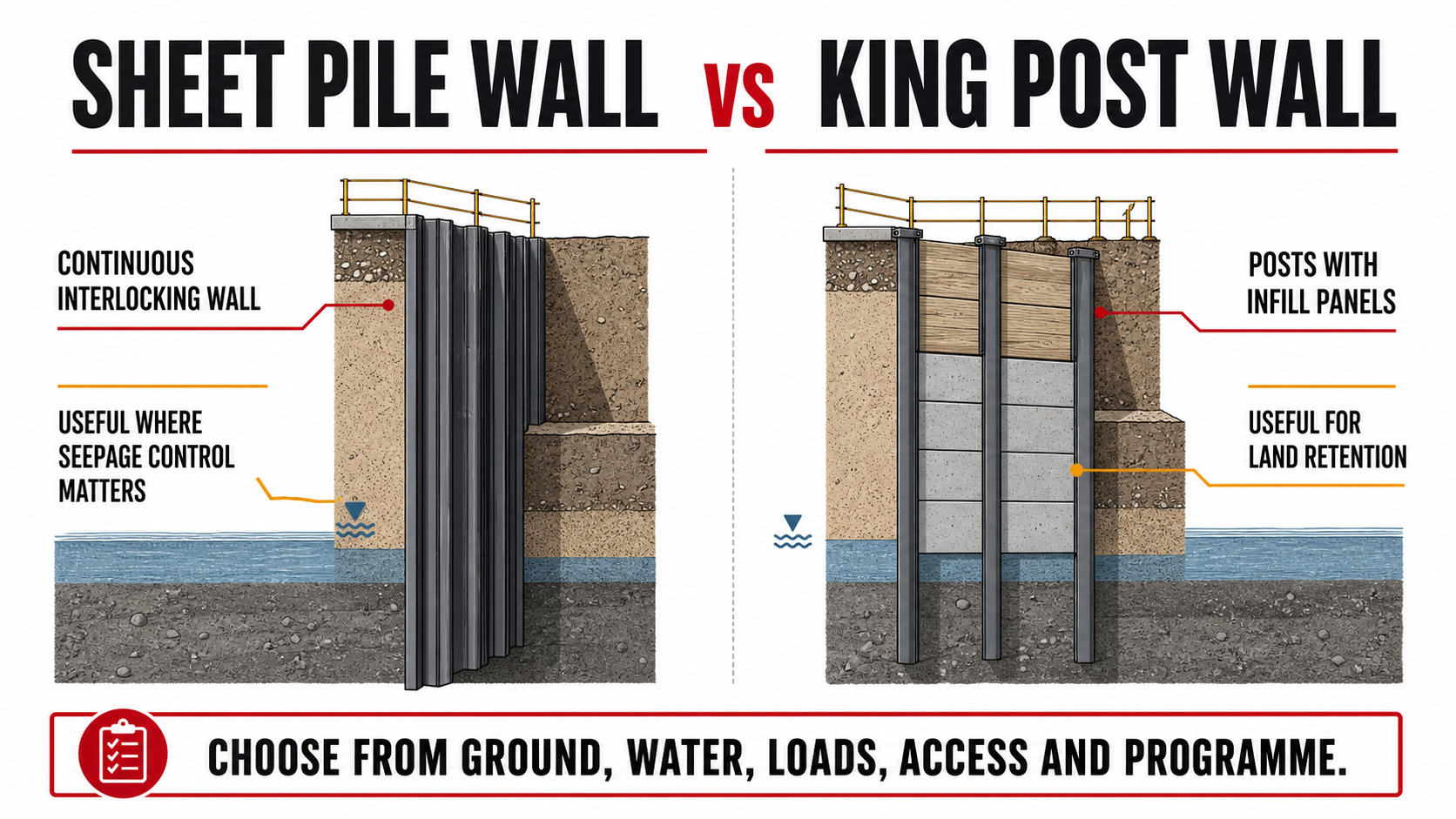
A sheet pile wall is made from interlocking steel sections driven or pressed into the ground to form a continuous retaining line. The continuous form is useful where a project needs to retain soil and manage the movement of water through the wall line, such as beside a watercourse, around an excavation or on a constrained infrastructure site.
Sheet piles can be used for both temporary and permanent works. The sheet pile retaining wall service is a good starting point where an excavation, embankment or boundary condition needs a robust engineered retaining solution.
What is a king post retaining wall?
A king post wall uses vertical steel posts installed at set centres, with infill panels placed between them. The infill is commonly timber or precast concrete. It is a practical retaining-wall arrangement for land-based sites where a continuous interlocked wall is not required.
Because the posts are spaced rather than interlocked, a king post system is not normally selected for applications that depend on a continuous barrier to control seepage. It can, however, be an efficient option where access, retained height, aesthetics and the proposed finish suit the arrangement. SPS installs king post retaining walls for appropriate commercial, residential and infrastructure applications.

Sheet pile wall vs king post wall: the practical comparison
| Consideration | Sheet pile wall | King post wall |
|---|---|---|
| Wall form | Continuous line of interlocking steel sections | Spaced steel posts with infill panels |
| Water and seepage | Often considered where a continuous wall line is required; joint treatment and design detail still matter | Not normally chosen where a continuous cut-off is needed |
| Typical setting | Excavations, waterside work, flood defence, temporary works and higher-demand retention | Land retention, boundaries, level changes and projects suited to panel infill |
| Installation approach | Can be vibrated, impact-driven or hydraulically pressed, subject to design and site constraints | Posts are installed first, then infill panels are placed as the wall is formed |
| Site appearance | Industrial steel finish or finished with a capping/architectural treatment | Can provide a more domestic or landscaped finish through the choice of infill |
When is a sheet pile wall the better fit?
Sheet piling is often worth considering where the wall has to do more than simply retain dry ground. Typical triggers include a high water table, a riverside or coastal location, an excavation close to existing assets, temporary works, or a need to limit excavation footprint.
The ICE Specification for Piling and Embedded Retaining Walls notes that interlocking steel sheet piles are used to resist horizontal soil and water pressures in both temporary and permanent situations, including cofferdams and retaining walls. Installation method is then selected around the ground conditions, the pile section, access and environmental constraints.
Where vibration or noise is a key issue, do not assume a conventional installation method will be acceptable. SPS can assess silent piling and Movax piling options for sites with sensitive neighbours, live assets, limited headroom or restricted working space.
When is a king post wall the better fit?
A king post wall may be the more straightforward choice where the primary requirement is land retention and there is no need for a continuous interlocked barrier. It can suit boundary level changes, commercial landscapes and development plots where the infill finish is part of the outcome.
That does not remove the need for engineering input. Groundwater, surcharge loads, drainage, retained height, adjacent structures and build sequence all affect the design. A wall that looks simple on a drawing can become more complex once site access and temporary stability are considered.
Do temporary works change the decision?
Yes. Temporary support is still engineered work, not a lower-risk shortcut. The HSE explains how temporary works should be planned and managed, and that temporary structures must withstand foreseeable loads. For excavations and other complex situations, the design, checking and coordination arrangements should be agreed before work starts.
A sheet pile wall is commonly used as temporary excavation support or as part of a cofferdam. A king post wall can also form part of a temporary solution, but the right answer depends on the actual ground and loading case—not on a standard preference.
Questions to answer before choosing either wall
- What ground conditions and groundwater levels are expected?
- What is being retained, and what surcharge loads sit behind the wall?
- Does the site need seepage control or a dry working area?
- Is the wall temporary, permanent, or serving both functions during the build?
- What plant can physically access the installation line?
- Are there vibration, noise, heritage, utility or neighbour constraints?
- What drainage, capping, corrosion protection and finish are required?
Talk to SPS about the retaining-wall method
The best time to involve a specialist is before the programme and access plan are fixed. Send SPS the available drawings, ground information, retained height, location and constraints, and the team can help identify whether sheet piling, king posts or another approach is most suitable for the project.
Discuss your retaining-wall project with Steel Piling Solutions.
Frequently asked questions
Is a sheet pile wall waterproof?
Interlocking sheet piles create a continuous wall, but water tightness depends on the wall specification, interlock condition, ground conditions and any sealing or detailing required. A specialist should review the required level of seepage control rather than assuming any sheet pile wall is fully watertight.
Are king post walls permanent?
They can be designed for permanent retention or used as part of temporary works. The intended design life, loading, drainage and material specification should be established early.
Which retaining wall is quicker to install?
There is no universal answer. Programme depends on the ground, wall length and depth, access, chosen plant, materials, sequencing and any monitoring or noise controls. Early review of these factors produces a more reliable installation plan.