

Key takeaways
- Review ground, archaeological and building-condition information together before choosing a piling method.
- Agree surveys, pre-augering and installation sequence with the project engineers and archaeologist.
- Record existing cracks and define vibration or movement monitoring triggers before work starts.
- Silent piling can reduce noise and vibration, but site-specific assessment and monitoring still matter.
Piling near a listed building or archaeological site starts with understanding what is beneath and around the work area. Review ground and heritage information early, record the nearby structures’ existing condition, and agree monitoring and response levels with the project engineers. The right piling method depends on the ground, foundation design, access and heritage constraints. Silent piling and pre-augering may help on some sites, but neither removes the need for site-specific assessment.
Why early planning matters
On a sensitive site, pile locations and installation methods can affect more than the new structure. Piling can disturb buried archaeological deposits, while vibration and ground movement may affect nearby buildings or their foundations.
Historic England’s guidance recommends assessing piling risks early and involving engineers and archaeologists in decisions about the foundation scheme. It covers options for avoiding or managing potential impacts on archaeological remains. Read Historic England’s guidance on piling and archaeology.
Start by bringing the project team together: the structural and geotechnical engineers, archaeologist, conservation specialist, main contractor and piling contractor. They can review the proposed foundation loads, pile layout, known remains, adjacent structures and construction sequence before the design is fixed.
Check planning conditions and consent requirements as well. In England, work that alters a listed building in a way that affects its special character may require listed building consent. The local planning authority can advise on the specific proposal. Historic England explains listed building consent.
Review surveys and record a baseline
Before selecting a piling method, review the available information together. This may include:
- Geotechnical and ground investigation reports, including groundwater levels and obstructions.
- Archaeological desk-based assessments, geophysical surveys, trial trenching or other evaluation agreed with the project archaeologist.
- Existing foundation records, utility plans and historic drawings.
- Structural information about the nearby building, including its foundations, condition and known repairs.
A survey can only inform the design if the team understands what it covers and where its limits are. For example, a ground investigation may describe soil conditions without locating archaeological features. The archaeologist and engineers should agree whether more investigation is needed and how it can be carried out without causing avoidable disturbance.
Record the condition of nearby buildings before work starts. A baseline condition or dilapidation survey can document existing cracks, repairs and other defects with dated photographs and measured locations. Where appropriate, a structural engineer may recommend crack gauges, levelling points or other movement monitoring.
Vibration monitoring provides a different kind of information: it records ground vibration at agreed locations during the works. It does not, on its own, show whether a crack has changed or explain the cause of building movement. The monitoring plan should state what will be measured, where, how often, who reviews the results and what happens if an agreed trigger level is reached.
Set vibration and movement triggers for the actual building and project with suitably qualified specialists. There is no single threshold that should be copied from another job: building condition, materials, foundations, distance from the works and the measurement method all matter. Crossrail’s vibration-management case study describes how vibration limits for listed buildings were considered in light of the specific building and evidence available.
Choose a piling method with the engineers
The piling method should follow from the ground conditions, design requirements and constraints identified in the surveys. Consider how the proposed equipment will reach the work area, where it will operate, how piles will be installed and whether the sequence affects neighbouring structures or archaeological zones.
Silent press-in piling avoids percussive pile driving and can reduce noise and vibration. That can make it worth assessing near sensitive buildings, museums, railways or other occupied sites. It still needs to be checked against the project’s ground conditions, pile design, access and monitoring requirements.
SPS’s silent piling service explains the press-in approach. The engineers and piling contractor should confirm that the proposed system is suitable for the site rather than assuming that one method will suit every heritage location.
Monitoring should be built into the work plan. Agree who receives readings, how often results are reviewed and who has authority to pause or change the operation. The plan should also set out how the team will investigate a reading that reaches an agreed trigger, and how any change to the method will be approved.
Where pre-augering may help
Pre-augering creates a bore in the ground before a pile is installed. By reducing resistance at a planned pile location, it may assist installation in some ground conditions and can be considered as part of a low-impact approach.
It is not automatically the right choice near archaeology. The auger itself enters and disturbs the ground, so its diameter, depth and position need to be considered against the location and significance of buried remains. Agree the approach with the geotechnical and structural engineers and the project archaeologist.
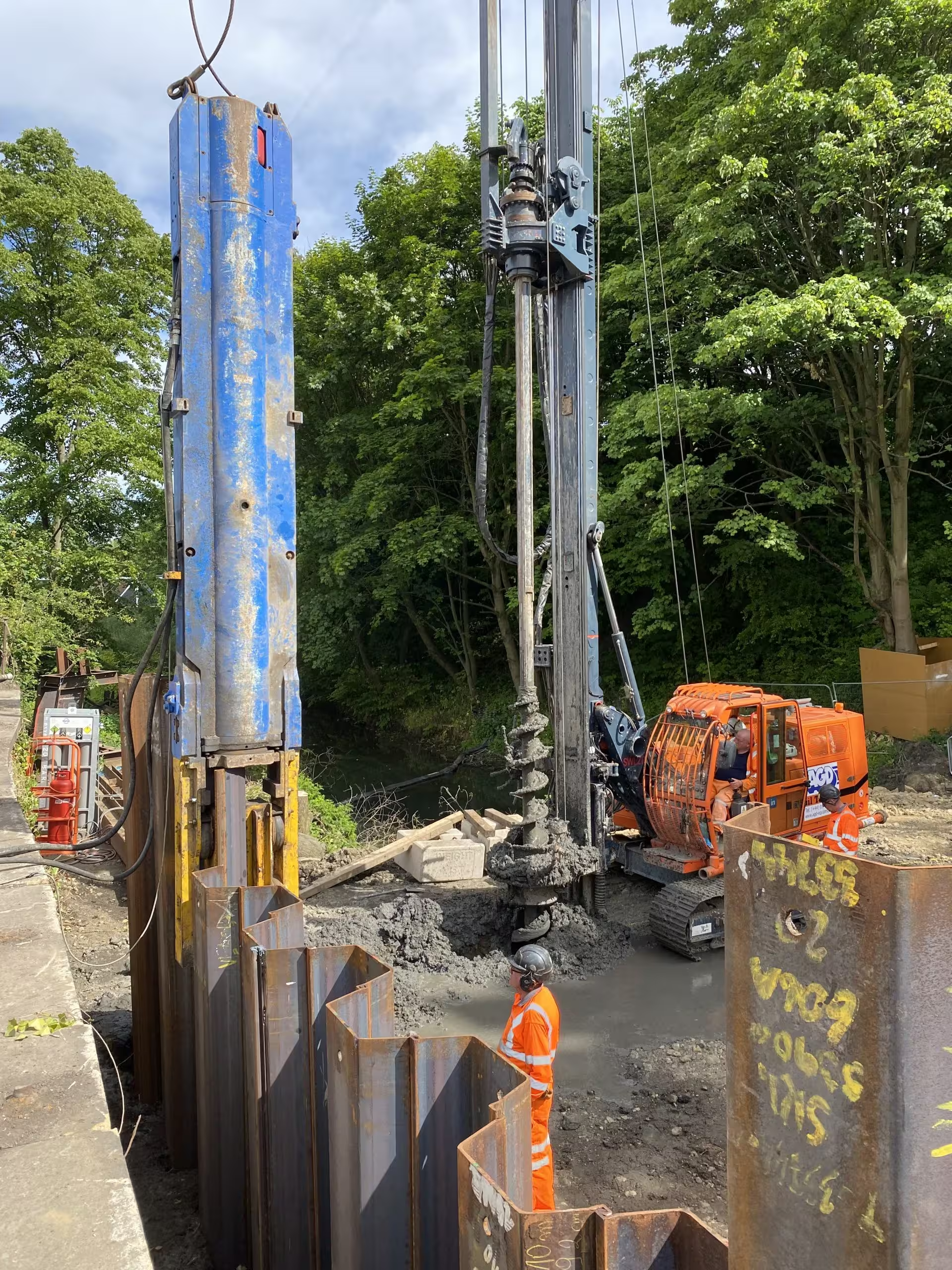
SPS provides further information about pre-augering for sheet piles. The project team should decide whether it is appropriate for the specific ground and archaeological constraints.
An SPS example at Leeds Industrial Museum
At Leeds Industrial Museum at Armley Mills, SPS used silent piling alongside vibration ground monitoring. This is the project example SPS identified for this article: it shows how piling method and monitoring can be considered together when work takes place in a heritage setting.
The wider lesson is to plan both parts of the work. Choosing a lower-vibration method can help manage one source of disturbance; monitoring gives the project team information to review as the work proceeds. The engineers, archaeologist and piling contractor still need to agree the site-specific method and response plan.
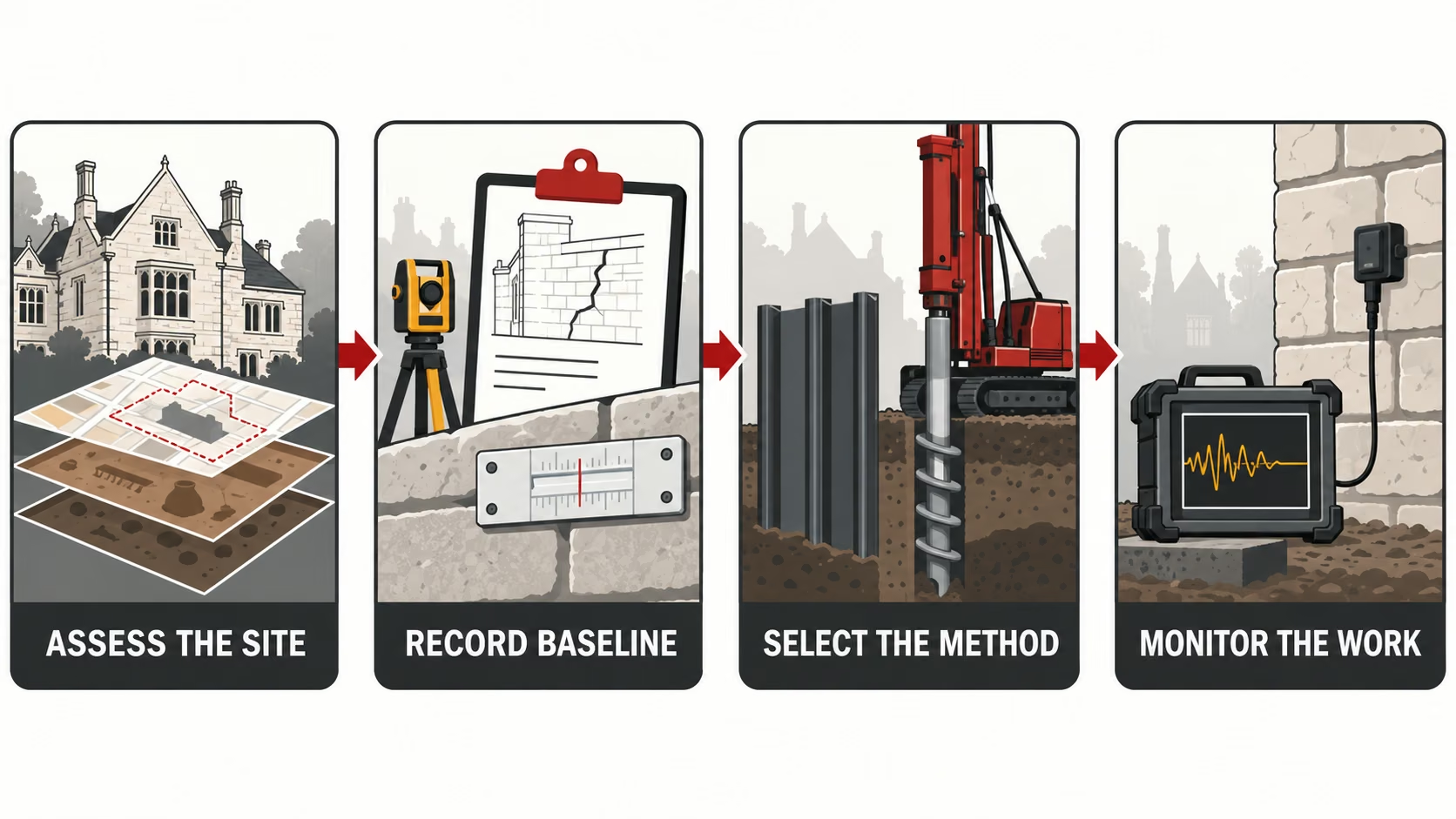
A practical sequence for sensitive sites
- Map the constraints. Identify nearby heritage structures, archaeological areas, utilities, access limits and known ground conditions.
- Review the evidence. Bring survey findings and design information together; commission further investigation where the team needs it.
- Record the baseline. Document existing building condition and establish any movement or vibration monitoring recommended by the specialists.
- Agree the installation method. Review silent piling, pre-augering and other viable options against the engineering design and site constraints.
- Set monitoring and response arrangements. Confirm locations, reporting, project-specific trigger levels and who can pause or adapt the work.
- Keep records. Retain monitoring results, surveys, changes to the agreed method and as-built pile information with the project record.
Can piling take place near a listed building?
It can, if the foundation design and construction approach are suitable for the site and the required planning or heritage requirements are addressed. The team should assess the building’s condition, the ground, potential archaeological remains and the likely effects of the proposed work before choosing a method.
Does silent piling mean there is no vibration?
Silent press-in piling avoids impact driving and can reduce noise and vibration. Actual effects depend on the equipment, ground, pile arrangement and surrounding structures, so the project team should assess whether monitoring is needed and agree how results will be handled.
Does pre-augering protect archaeology?
Not by itself. It may help with installation in some conditions, but it also disturbs ground at the augered locations. The archaeologist and engineers should review the proposed depth, diameter and position against the archaeological information.
Talk to SPS about a sensitive site
If your project involves piling near a listed building, museum or archaeological site, bring the survey information, proposed pile layout and known restrictions into the early discussion. SPS can review the piling options with your project team. Find out about land piling or contact SPS to discuss the site.